
Ways of Counting Days
Right now it is...
"Today" feels like a fact. It is actually a choice, one that different people made differently, and one we could still make again. Scroll through the ways humans have counted their days.
 ROOM 01 · THE REBELS
Calendars that tried to fix ours
The Gregorian calendar is legacy code. Months of random lengths, a February that changes size, and a year count that starts from an arbitrary theological guess. Twice in the last two centuries, serious people proposed patches. Neither shipped. Both still work.
The Holocene Calendar
Proposed by scientist Cesare Emiliani in 1993. One change: add 10,000 years, so the count begins near the dawn of human civilization instead of partway through the story. No more counting backwards through BC. The pyramids rise around 7,400 HE. Rome falls around 10,476 HE. You are living in 12026 HE.
The International Fixed Calendar
Thirteen months of exactly 28 days. Every month starts on a Sunday. The 13th month, Sol, sits between June and July. One leftover Year Day belongs to no month at all, a built-in holiday outside of time. The Eastman Kodak Company ran its entire business on this calendar from 1928 to 1989, and it worked fine.
Pick a birthday. See what it would have been.
 ROOM 02 · THE SKY
What the calendar forgot to look at
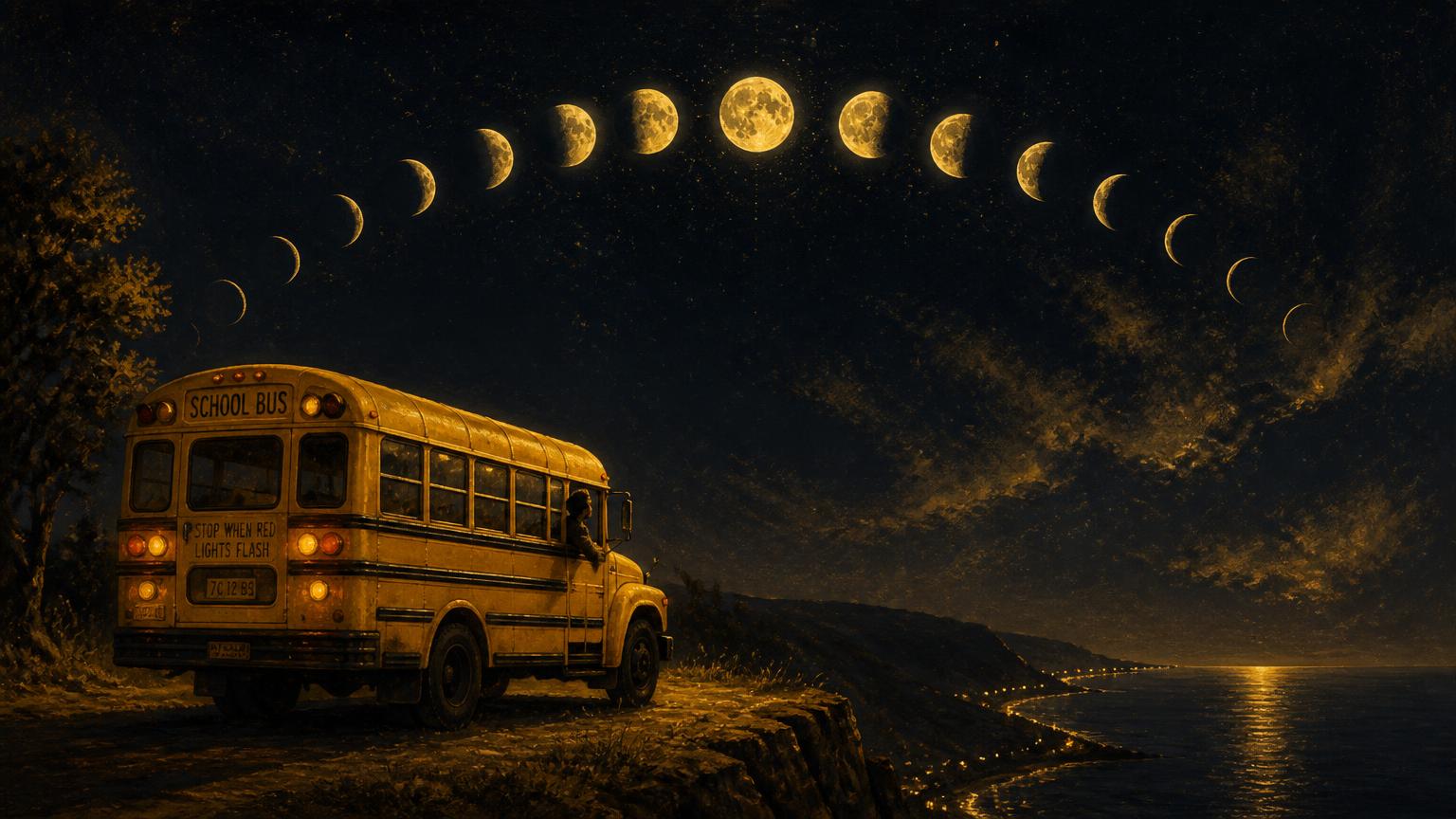
The word month comes from moon. Then the months drifted. A real lunar cycle runs about 29.5 days, so twelve of them fall 11 days short of a solar year. Rome papered over the gap, and the months have ignored the actual moon ever since. The sky kept its own schedule anyway.
Rendered live. This is the moon over Venice Beach right now.
Next stop on Earth's orbit
Solstices and equinoxes are not human inventions. They are physical positions on our lap around the Sun, and every culture that ever watched the sky found them.Counting...
 ROOM 03 · THE ZOOM
One year, thirteen point eight billion
Carl Sagan's Cosmic Calendar compresses the entire history of the universe into a single year. The Big Bang is midnight on January 1. This moment is midnight on December 31. Every day equals about 37.8 million years. Watch how late we show up.
- January 1The Big Bang. Time starts counting.
- January 22The first galaxies switch on
- March 16The Milky Way takes shape
- September 2The Sun ignites
- September 6Earth forms from leftover dust
- September 21Life appears, single cells in ancient water
- December 5First multicellular life
- December 25Dinosaurs arrive
- December 30Dinosaurs exit, 6:24 am
- December 31, 10:24 pmFirst humans stand up
- December 31, 11:59:46 pmAll of recorded history. Every calendar ever invented fits in the last 14 seconds.
The galactic year
Zoom out one more level. The whole solar system orbits the center of the Milky Way once every 225 million Earth years or so. By that clock the Sun is only about 20 galactic years old, and the dinosaurs went extinct a bit over a quarter of one galactic year ago. Somewhere out there is the stretch of the galaxy we passed through when the first humans looked up.
 ROOM 04 · THE ANCESTORS
Calendars still keeping their own time
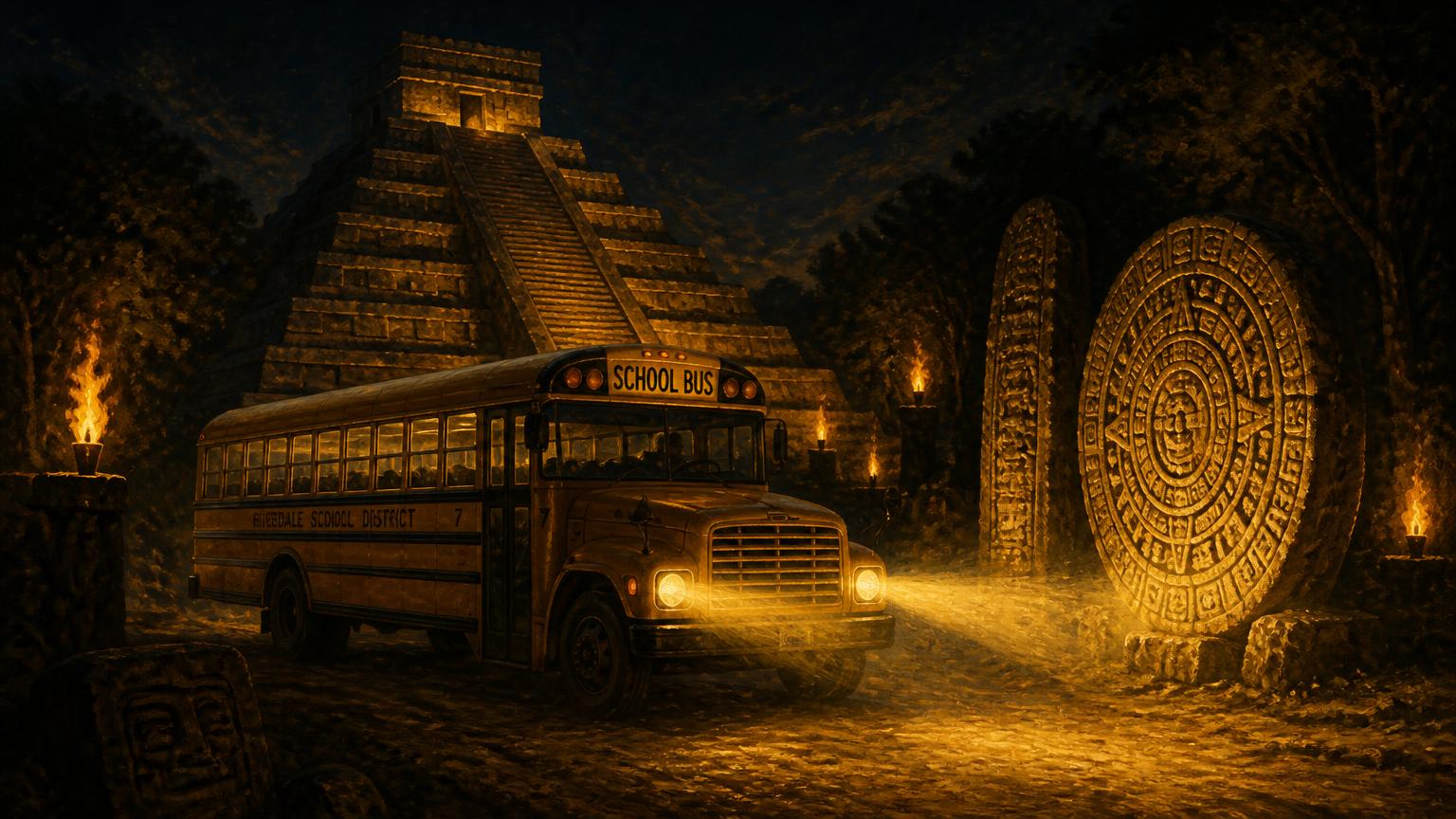
The Gregorian calendar did not replace the others. It just got the paperwork. These systems are all still running, still counting today in their own way, some of them for thousands of years without a reboot.
- Reading today in every system...
The Maya one deserves a pause. It is not a cycle at all, just a straight count of days, base 20, ticking upward for over five thousand years. The famous 2012 apocalypse was simply an odometer rolling over. The count kept going. It is still going, in the number above.
This exact moment
Same moment. Eight names. None of them wrong. A calendar is just a story a culture tells about where it stands in time, and every one of these stories is still being told tonight, under the same moon.
LUNABUSCO · Venice Beach · 12026 HE